

By Nazry Bahrawi

For his unwitting role in shaping Singapore, Abraham Maslow can be seen as the modern equivalent of Sang Nila Utama. Like the Hindu prince, the American psychologist was central to defining this island-state on the back of something imaginary.
If Sang Nila’s illusionary lion gave us our name, Maslow’s concept of human motivations is imprinted into our soul.
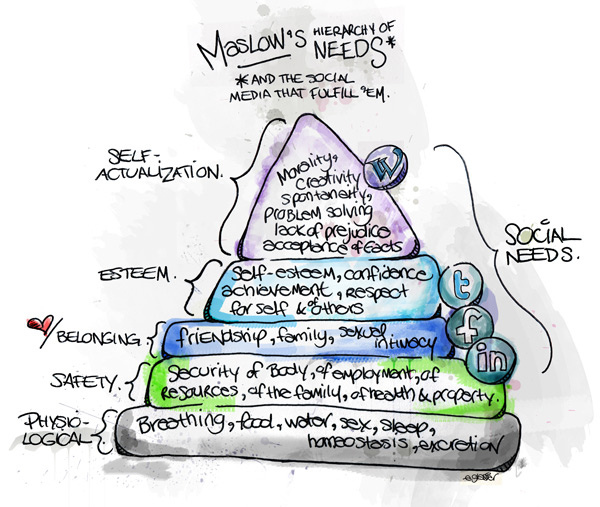
Popularly known as ‘Maslow’s hierarchy of needs’, this theory states that human needs are structured and incrementally fulfilled. We operate by first satisfying our basic physical needs such as sleep and food, then working our way through a series of other needs before finally seeking to attain self-actualisation through the pursuit of virtues like morality and creativity, among others.
Agreeing that material needs matter most when Singapore first gained independence, political elites were quick to profess economic pragmatism as our national philosophy. Policies were crafted to ensure that resource-scarce Singapore attracts foreign investment and stays that way.
Almost 50 years later, signs are suggesting that Maslow was not quite right – people do not necessarily pursue their needs in stages, but all at once.
Take the recent Institute of Policy Studies (IPS) survey that found Singaporeans expressing a desire for a less competitive and more compassionate society. Also consider the emergence of a greater number of ordinary Singaporeans championing non-economic, organic causes like the anti-death penalty campaign, LGBT rights and Internet freedom.
Things are changing even in the business sector, as more young Singaporeans venture out to set up SMEs with some degree of civic conscience. A good example is Poached, an online lifestyle magazine that injects their otherwise ‘fluff’ articles with a dose of social commentary.
Despite these indications, policymakers are not quite ready to rethink their appropriation of Maslow’s theory.
Having proposed that Singapore is fast becoming post-pragmatic at a closed-door conference three years ago, a senior political figure said to me that Singaporeans have not fully resolved their bread and butter issues. I distinctly remember him saying with conviction: “Recall what Maslow said.”
Newer political leaders are no different. Reacting to the above-mentioned IPS survey, MP Zainal Saparin was quoted as saying: “When ours was a growing economy, and survival was a key concern, there was a lot of emphasis on being hardworking, accumulating wealth, fighting for a better life.”
But contrary to Maslow’s postulation, Singapore is proving to be a place where even the poor dreams. We are capable of self-actualising even if we have not slept nor ate enough.
One possible way of sidestepping the tyranny of Maslow’s hierarchy of needs is to look for alternative measures of progress. A viable example is the Social Progress Index (SPI) introduced just this year. The SPI tabulates national progress by measuring GDP growth in relation to social and environmental outcomes. Some ASEAN member-states like Thailand, Vietnam and Indonesia have already become signatories to this index. Why not Singapore?
Another suggestion is to establish a national body that will fund serious study of the arts and humanities in the same manner that the National Research Foundation (NRF) and A*Star sponsor science and technological research. Such an institution will be different from the National Arts Council, which focuses on funding practitioners, because its aim is to build up a repertoire of cultural critics and experts who can help Singaporeans make sense and appreciate this much-ignored aspect of human life.
This disjuncture at this juncture of the Singapore story has placed us in danger of losing the plot. What will be our next move?
Nazry is a lecturer at the Singapore University of Technology and Design, and research fellow at the Middle East Institute-NUS.
 Follow Google News
 Join us on WhatsApp
 Follow us on Telegram