
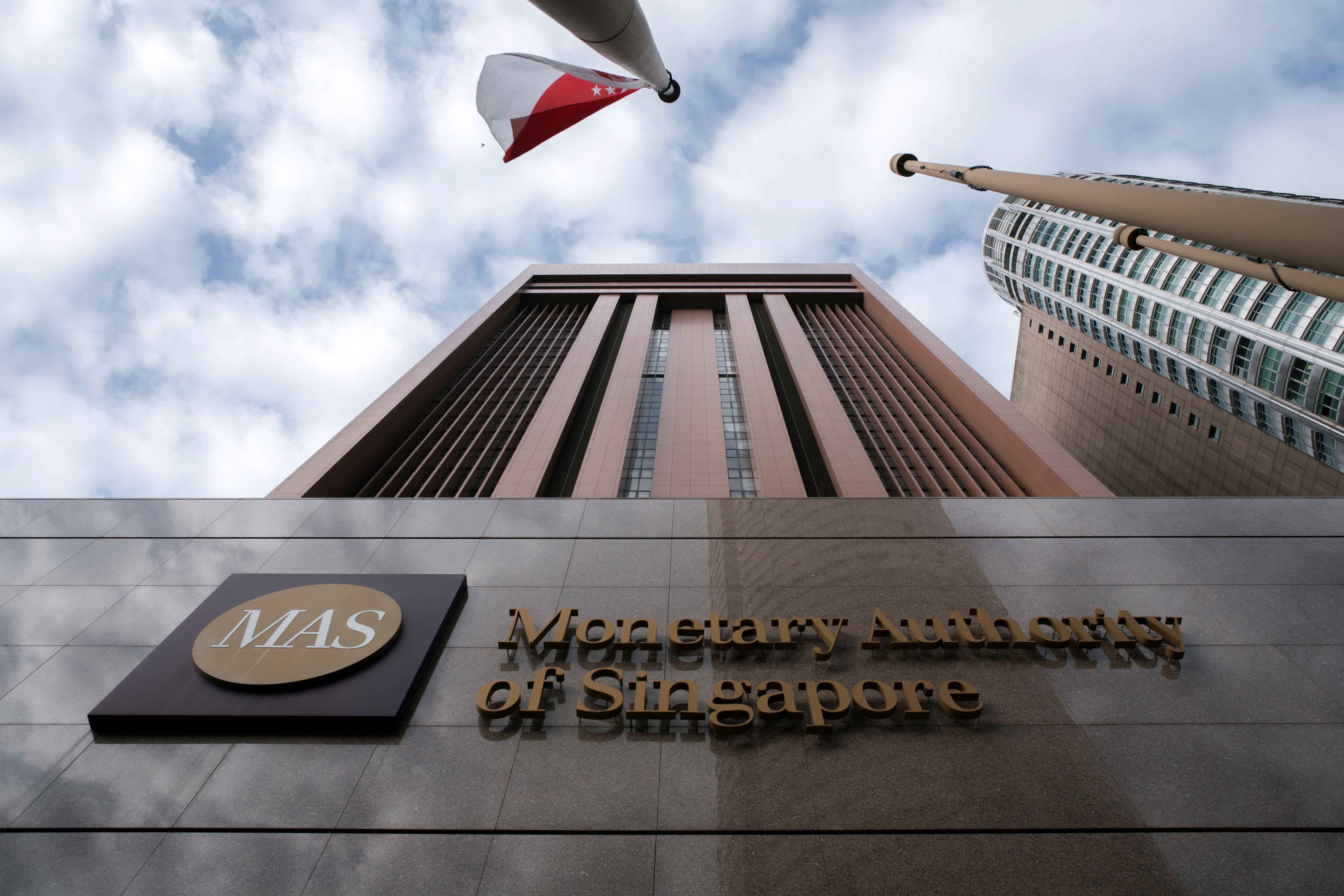

SINGAPORE: The Monetary Authority of Singapore (MAS) posted a net profit of S$20 billion (US$15 billion) for the financial year ended March 31, marking its third-highest annual profit on record as strong investment returns outweighed currency-related losses and operating expenses.
According to the central bank’s annual report released on Tuesday (July 28), the latest result includes a S$1 billion contribution to the Government’s Consolidated Fund, the first such contribution since the 2020/2021 financial year. In addition, MAS’ board approved a further return of S$2.5 billion to the Government to offset losses accumulated in previous years.
MAS Managing Director Chia Der Jiun said the strong performance reflected a global economy that had remained resilient despite repeated shocks, alongside financial markets that continued to perform well.
He said global financial conditions had so far remained favourable, with equity market valuations staying elevated despite recent market pullbacks.
Speaking at a press conference, Mr Chia noted that all major asset classes, including bonds and equities across both developed and emerging markets, generated positive returns during the financial year.
MAS recorded investment gains of S$39.8 billion over the period. Those gains were partly offset by negative currency translation effects amounting to S$16.4 billion, after the Singapore dollar strengthened against the US dollar and Japanese yen, as well as net expenses of S$2.4 billion.
Part of those expenses arose from the central bank’s money market operations to manage liquidity within Singapore’s banking system.
Mr Chia said investment gains naturally fluctuate from year to year but noted that this year’s performance was broadly in line with last year’s and significantly above MAS’ 10-year historical average investment gain of S$18.3 billion.
The central bank reported a net profit of S$19.7 billion in the previous financial year but did not make a contribution to the Consolidated Fund at that time.
The Consolidated Fund functions as the Government’s main account into which state revenues are paid and from which government expenditure is financed.
While reflecting on the positive investment performance, Mr Chia cautioned that the rapid expansion of artificial intelligence investment represents one of the biggest uncertainties facing the global economy.
He said AI-related spending continues to support economic growth in the near term, but questions remain over whether the pace of investment can be sustained over the medium term, given the substantial equity and debt financing required.
“In the race for model advantage and to scale adoption, projected investments by hyperscalers and model builders have expanded beyond cashflows and commercial revenues,” he said.
Mr Chia added that global economic growth, investment activity and financial market performance have become increasingly tied to expectations that spending on data centres and semiconductors will continue for years to come.
“The sustainability of AI investments is thus highly consequential for global growth and financial stability,” he said.
He outlined two possible medium-term scenarios that could significantly affect the global economy.
In one scenario, stronger revenue growth and broader productivity improvements could sustain the current AI investment boom for a prolonged period, although challenges remain around successfully monetising those investments.
Alternatively, if returns from AI investments fail to meet expectations, hyperscalers may slow their pace of spending, prompting investors to reassess asset valuations.
“The implications are significant if either outcome comes to pass,” Mr Chia said.
Separately, MAS said Singapore’s financial sector continued to expand despite a more uncertain global backdrop.
The sector grew 4.3% in 2025, maintaining the momentum seen between 2021 and 2025, during which annual growth averaged 4.6%.
Over that five-year period, the industry added around 4,200 jobs each year, with the employment gains going to locals, MAS said.
The banking sector recorded asset growth of 3.1% in 2025, while assets in the insurance industry rose 7.6% to S$493.5 billion.
In a separate survey released on Tuesday, MAS said assets under management climbed 10.1% to S$6.7 trillion at the end of 2025, supported by robust market performance and continued net inflows.
The central bank added that Singapore’s wealth management industry also continued to register strong growth alongside the broader asset management sector.
 Follow Google News
 Join us on WhatsApp
 Follow us on Telegram