
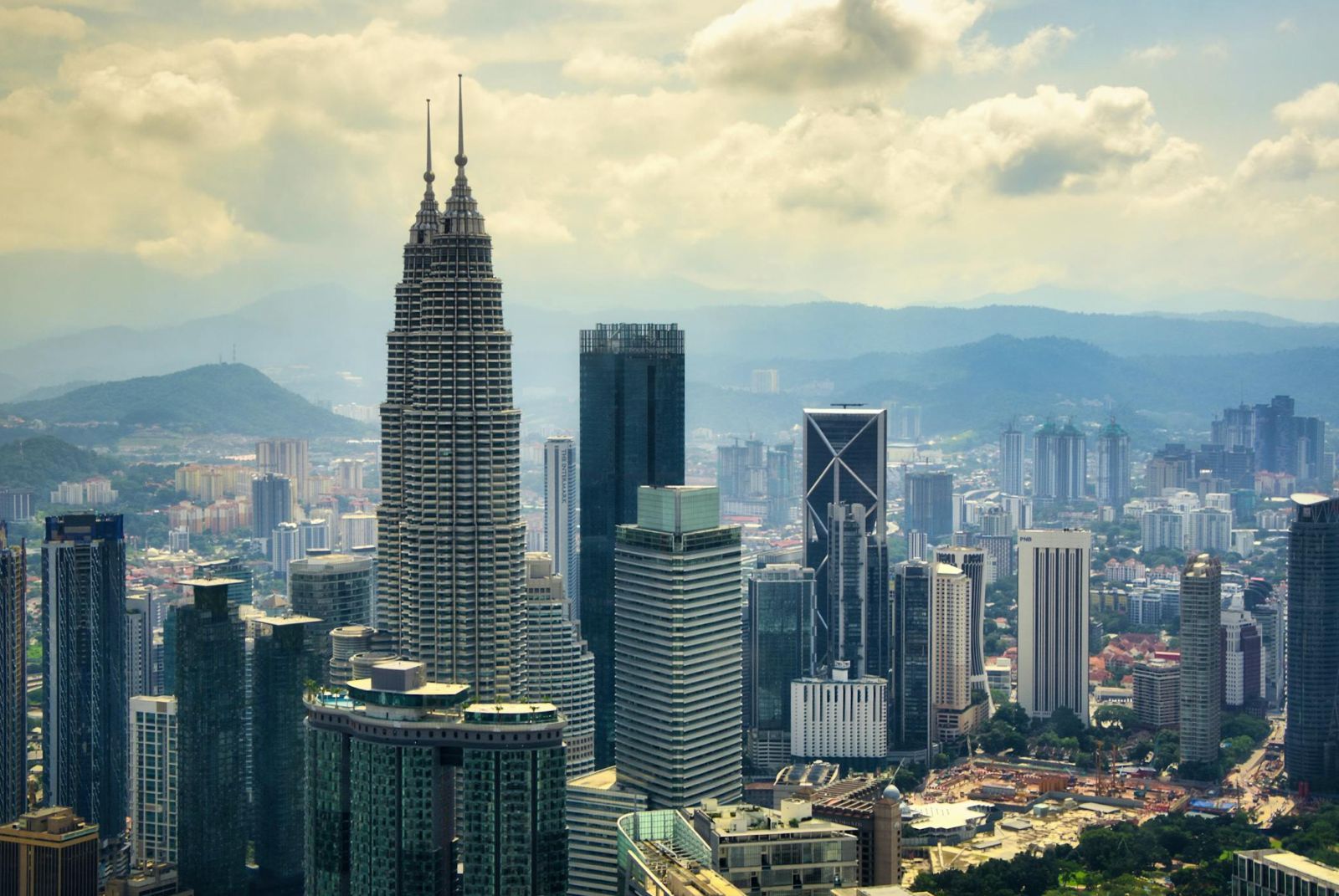

MALAYSIA: Kuala Lumpur’s urban growth has reached a striking new level, with condominiums and office towers standing almost side by side. District boundaries are blurring, gradually merging into what feels like a single mega-metropolis. From Ampang to Petaling Jaya, the skyline is now a near-continuous stretch of skyscrapers.
The development around the Petronas Twin Towers, or commonly known as KLCC, has been spiked even further as demand is increasing.
Social media users have voiced frustration over new developments near KLCC. Condominiums marketed with unobstructed views of the Petronas Twin Towers are now overshadowed by larger, newer projects rising just metres away.
Many feel the original selling point of a guaranteed skyline view has lost its validity within only a few years, leaving buyers disappointed.
One user on X questioned why developers are building yet another 65-storey condominium next to KLCC. The user argued that the municipality is failing to protect the city’s skyline, allowing projects that overshadow Kuala Lumpur’s iconic view.
The user also warned that traffic congestion, already notorious for two-hour jams along Jalan Ampang, will likely worsen with the addition of such massive developments.
Some critics argue that those driving overdevelopment are not directly affected by its consequences.
Another user claimed that the individuals pushing these projects forward live comfortably in mansions on the hills, far removed from the realities of city life. As a result, they are unlikely to endure the notorious traffic jams along Jalan Ampang and Jalan Tun Razak.
Others argue that iconic monuments should not be overshadowed by competing skyscrapers. Another user pointed out that there is a reason why the Eiffel Tower in Paris is not crowded with high-rises around it.
In contrast, unchecked development in Malaysia has led to mountains being cut down, forests destroyed, and drains clogged, raising concerns about sustainability and urban planning.
The high-end condominium market in Malaysia could face negative repercussions if current trends persist. Only a small segment of Malaysians can realistically afford luxury condominiums, particularly those located in prime urban areas.
With limited demand and rising supply, the sustainability of this market is increasingly in question, raising concerns about oversaturation and long-term viability.
 Follow Google News
 Join us on WhatsApp
 Follow us on Telegram