
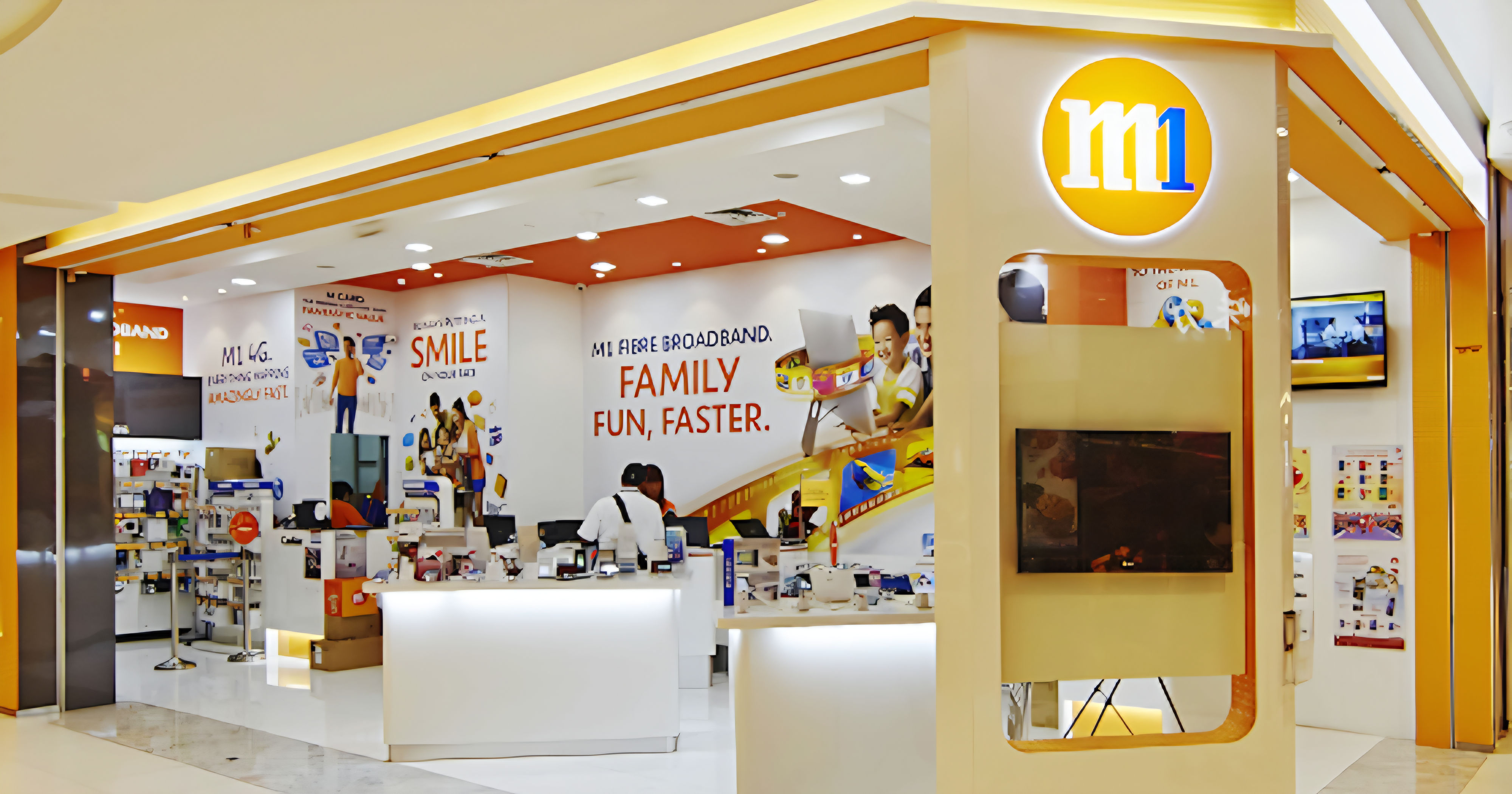

SINGAPORE: Singapore’s telecommunications sector is expected to face continued cost pressures after the Infocomm Media Development Authority (IMDA) suspended its review of the proposed merger between M1 and Simba on May 18, effectively bringing an end to a deal that analysts had hoped would ease intense competition in the market.
The collapse of the merger between Singapore’s third- and fourth-largest telcos is also seen as a setback for Keppel’s asset-light transformation plans. The divestment of M1 was expected to unlock about $1 billion for the asset manager.
Analysts told The Straits Times that consolidation within the telco industry would likely have helped stabilise pricing competition and support a recovery in average revenue per user (ARPU), which has been declining across the sector.
However, the proposed transaction now appears unlikely to proceed. Keppel confirmed during a media and analyst briefing on May 18 that it would allow the sale and purchase agreement between M1 and Australia-backed Simba to lapse once the long-stop date is reached on May 21.
The deadline had previously been extended on March 26 after initially being due to expire earlier. A long-stop date refers to the contractual deadline by which all required conditions, including regulatory approvals, must either be met or waived, failing which either party may terminate the agreement.
The market reacted swiftly following the announcement. Shares of StarHub and Singtel initially slipped by around 1% and 0.6%, respectively, when trading opened on May 18. Singtel later recovered and ended the day 1% higher at $4.87, while StarHub closed unchanged at $1.
Keppel’s shares also came under pressure. The counter fell as much as 4% in early trading to $10.18 at 9:28 am before recovering slightly to close 2.1% lower at $10.38.
The merger was first announced in August 2025 but remained subject to an extended review process by IMDA. The regulator had been assessing whether the transaction would substantially reduce competition or raise concerns relating to the public interest.
IMDA had also highlighted the importance of ensuring that critical telecommunications infrastructure continues to meet strict cybersecurity standards amid an increasingly complex cyber-risk environment.
Analysts additionally pointed to Simba’s alleged breach of the Telecommunications Act and the conditions attached to its facilities-based operations licence, describing the matter as unprecedented for a telecommunications operator in Singapore. It remains unclear whether the alleged breach involved specific officers within the company or Simba as a corporate entity.
Following the collapse of the deal, Keppel chief executive Loh Chin Hua said the company would implement a 90-day plan aimed at improving M1’s operational efficiency. Measures include reducing technology platform and network costs while expanding the use of artificial intelligence to automate operations.
Mr Loh said further details would be provided during Keppel’s first-half 2026 results briefing, which is expected in July.
Keppel will also remove the proposed divestment of its stake in M1 from its monetisation plans for 2025. However, the company maintained its broader target of divesting between $2 billion and $3 billion worth of non-core assets in 2026, which had been announced during its first-quarter business update in April.
Responding to questions during the briefing, Mr Loh said Keppel’s priority now is to “strengthen M1 and make it more valuable and attractive” to secure the best possible valuation when the telco is eventually sold.
He added that M1’s operations would not materially affect Keppel’s earnings. However, shareholders would now have to wait longer for the previously anticipated special dividend of between seven and 11 cents that was expected from the sale to Simba.
“We hope to bring other monetisation targets forward to this year to fill the gap,” he said.
M1 chief executive Manjot Singh Mann said the company would begin shifting focus towards operational efficiency after completing the deployment of its 5G network. He noted that M1 intends to gradually reduce capital expenditure and concentrate more heavily on operations and maintenance.
Analysts warned that the failed sale could still weigh on Keppel’s business in the near term, particularly as investors reassess the group’s monetisation strategy.
With the long-stop date set to expire, Keppel will now be free to reopen negotiations with other interested buyers.
Mr Loh confirmed during the briefing that Keppel had previously held serious discussions with at least two bidders. Before Simba entered into the agreement with Keppel, market speculation had linked StarHub to a possible acquisition of M1.
Some analysts believe StarHub could return to the negotiating table, arguing that a successful acquisition would strengthen its position against market leader Singtel, which controls roughly 45% of Singapore’s mobile market.
By contrast, analysts said a merger between M1 and Singtel remains highly improbable because of Singapore’s competition laws, which generally prevent dominant market players from pursuing major consolidations. However, exceptions have been granted in other sectors before, such as the Competition and Consumer Commission of Singapore’s approval of BRC Asia’s $199.3 million acquisition of rival Lee Metal Group in 2018.
A possible StarHub-M1 merger could also create additional challenges for Simba. Analysts noted that Simba’s market share would become substantially smaller compared with the two larger incumbents, potentially threatening its long-term competitiveness.
The fallout from the failed transaction also hit Simba’s parent company, Tuas, on the Australian Stock Exchange. Tuas shares plunged by as much as 72.1% from last week’s closing price of A$6.10 (S$7.81) to A$1.98 before recovering slightly to end the session 62.8% lower at A$2.27.
The sharp decline came despite Tuas recently reporting strong financial results. For the first half of the financial year ended January 31, 2026, the company posted a 26% rise in revenue to $78.1 million and a 27% increase in EBITDA to $42.1 million.
Tuas attributed the growth to the rapid expansion of Simba’s mobile and broadband subscriber base. The company also said it would continue investing in Simba’s mobile and fibre broadband operations, with planned capital expenditure of between $50 million and $55 million.
 Follow Google News
 Join us on WhatsApp
 Follow us on Telegram