
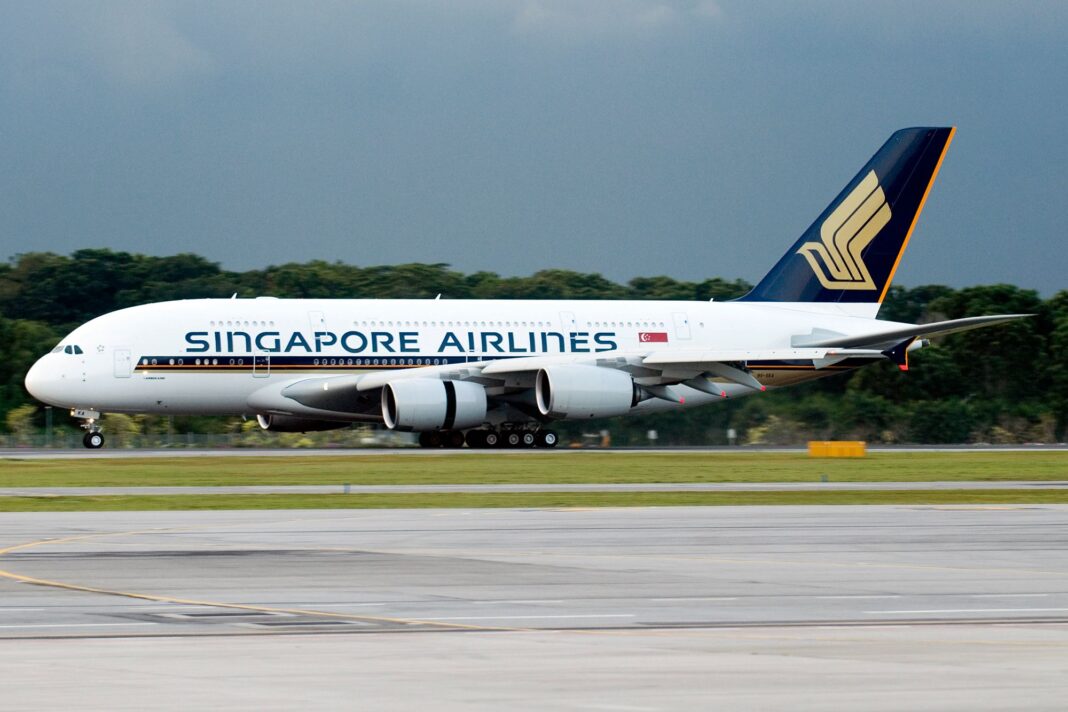

SINGAPORE: An interfaith advocate has weighed in on the way Singapore Airlines’ (SIA) handles Muslim in-flight meals, describing complaints about reheating practices as “embarrassing.”
The discussion was sparked after SIA clarified that its Muslim meals are not halal-certified, despite being prepared using ingredients sourced from halal-certified suppliers. The airline attributed the lack of certification to onboard handling procedures.
The issue first emerged on April 20, when a social media user questioned whether Muslim meals were reheated in the same ovens as dishes containing pork. In response, an SIA spokesperson said the airline’s Muslim meal options are prepared without pork, lard, or alcohol and that all ingredients are obtained from halal-certified sources.
However, the airline acknowledged that meals are reheated alongside other dishes in shared ovens, and that serviceware is not separated by meal type.
Several individuals identifying themselves as current or former cabin crew members joined the debate online, confirming that halal and non-halal meals are typically heated together. They added that Muslim and Kosher meals are usually handled with some distinction, often placed on the top rack of the oven.
Passengers requiring Muslim meals are advised to request them at least 24 hours before departure through SIA’s special meals option.
The Islamic Religious Council of Singapore (MUIS) also addressed the issue via its HalalSG platform, noting that food labelled “not halal-certified” does not necessarily mean it is non-halal. The council explained that Muslim meals on SIA flights departing Singapore are prepared in halal-certified kitchens before being loaded onto aircraft, and that onboard processes involve reheating and handling rather than cooking.
MUIS added that airlines typically have measures in place to reduce the risk of cross-mixing, such as sealed packaging and appropriate handling procedures. It encouraged passengers to check with airlines directly if they have concerns, and suggested bringing their own food as an alternative if needed.
Amid the debate, Mohamed Imran Mohamed Taib, founder director of the Dialogue Centre and vice-chairperson of the Centre for Interfaith Understanding, shared his views in a Facebook post on April 30. He described the controversy as unnecessary and said the issue was “frankly, embarrassing” to him as a Muslim.
Mr Imran drew a distinction between inclusivity and entitlement, arguing that SIA’s provision of Muslim meal options reflects inclusivity, while insisting that halal certification crosses into entitlement. He noted that the airline had already made clear that its ingredients are sourced from halal-certified suppliers.
“To further question this is no longer a question of food but one’s attitude and trust,” he wrote, adding that Muslim passengers who remain uncertain can choose not to consume the meals.
He also criticised calls for separate microwaves for halal and non-halal food, describing such demands as “annoyingly puritanical,” “misplaced,” and “ignorant”.
Mr Imran’s post drew significant attention online, with many netizens expressing support. Some commenters emphasised the importance of coexistence, with one noting that people “cannot live in ethnic or religious bubbles”, while another highlighted that food consumption is ultimately a personal choice.
Others, however, took a different view. One commenter argued that consumers are entitled to seek what they believe is best for them and that it is reasonable to expect airlines to adopt appropriate processes. Another questioned whether Muslim concerns were being unfairly scrutinised.
In response, Mr Imran maintained that not all requests are problematic, but said criticism is warranted when demands are, in his view, unreasonable or based on misunderstanding.
 Follow Google News
 Join us on WhatsApp
 Follow us on Telegram