

China is disinfecting and isolating used banknotes as part of efforts to stop the spread of the new coronavirus that has killed more than 1,500 people, officials said Saturday.
Banks use ultraviolet light or high temperatures to disinfect yuan bills, then seal and store the cash for seven to 14 days — depending on the severity of the outbreak in a particular region — before recirculating them, China’s central bank said at a press conference.
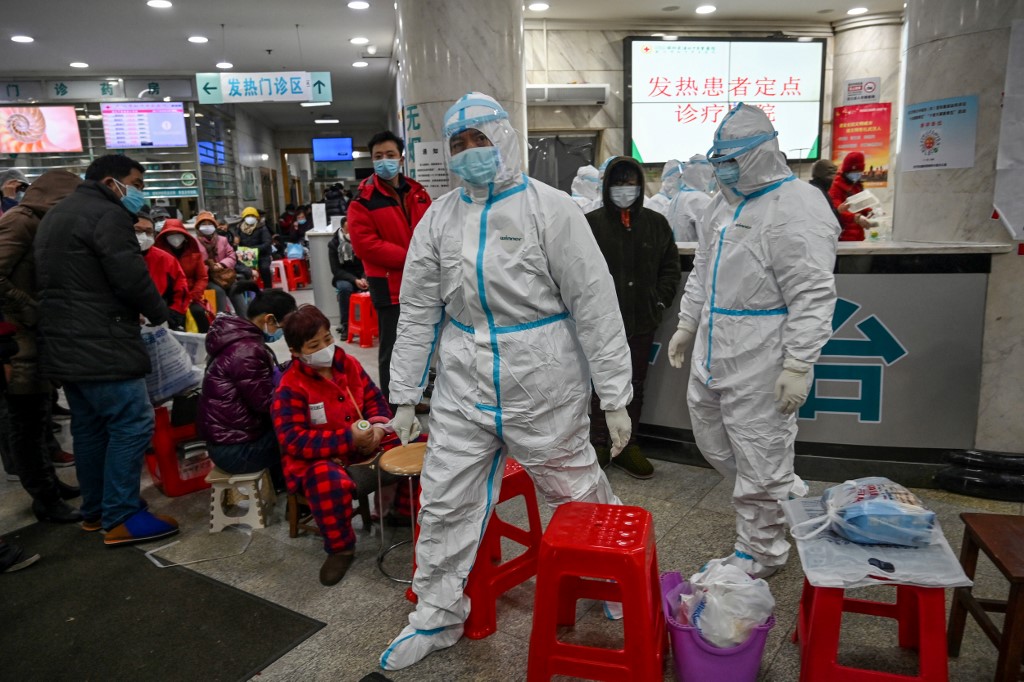
The virus, which has infected more than 66,000 people in China and spread to more than two dozen other countries, has sparked a rush to disinfect public places and minimise contact between people.
Pharmacies across the country sold out of disinfectants and surgical masks in just days after a lockdown was announced in late January on Wuhan city, where the COVID-19 illness is believed to have emerged.
Office buildings have installed packets of tissue in elevators that tenants are encouraged to use when pressing buttons, while ride-hailing company Didi exhorts drivers to disinfect their cars daily.
– ‘Emergency issuance’ –
Fan Yifei, deputy governor of China’s central bank, said Saturday that banks have been urged to provide new banknotes to customers whenever possible.
The central bank made an “emergency issuance” of four billion yuan in new notes to Hubei province, the epicentre of the outbreak, prior to the recent Lunar New Year holiday, Fan added.
The measures are intended to “secure the public’s safety and health when using cash”, Fan said.
But it is unclear how wide an impact the central bank’s disinfection work will have, with increasing numbers of Chinese people preferring mobile payments over cash in recent years.
In 2017, nearly three quarters of Chinese respondents told an Ipsos survey they could survive a whole month without using more than 100 yuan in cash.
According to the World Health Organization, COVID-19 can be spread through contaminated objects in addition to droplets and direct contact with infected patients.
tjx/lth/axn
© Agence France-Presse
/AFP
 Follow Google News
 Join us on WhatsApp
 Follow us on Telegram