
Amid global calls for AI slowdown, Minister Josephine Teo shares her take
SINGAPORE: Over the past week, a number of prominent industry leaders have called for a slowdown in the development of Artificial Intelligence (AI), citing substantial, perhaps even existential, safety risks.
Among them are Anthropic co-founder Dario Amodei, OpenAI chief executive Sam Altman, and even SpaceX head Elon Musk.
“We must slow the pace at which we improve the capabilities of AI models,” Dr Amodei wrote, calling for “pacing the rate of capabilities advancement so that risk prevention has time to keep up… Progress will still seem fast, and we must make wise use of the time we gain.”
In the meantime, while China’s concerns with AI have key differences with much of the West, its policymakers have expressed worries about political and social risks, and Beijing has been keeping a close eye on cybersecurity threats.
But what about Singapore? The tech-forward city-state has certainly embraced an AI push, as evidenced when Prime Minister Lawrence Wong announced the national Budget this year.
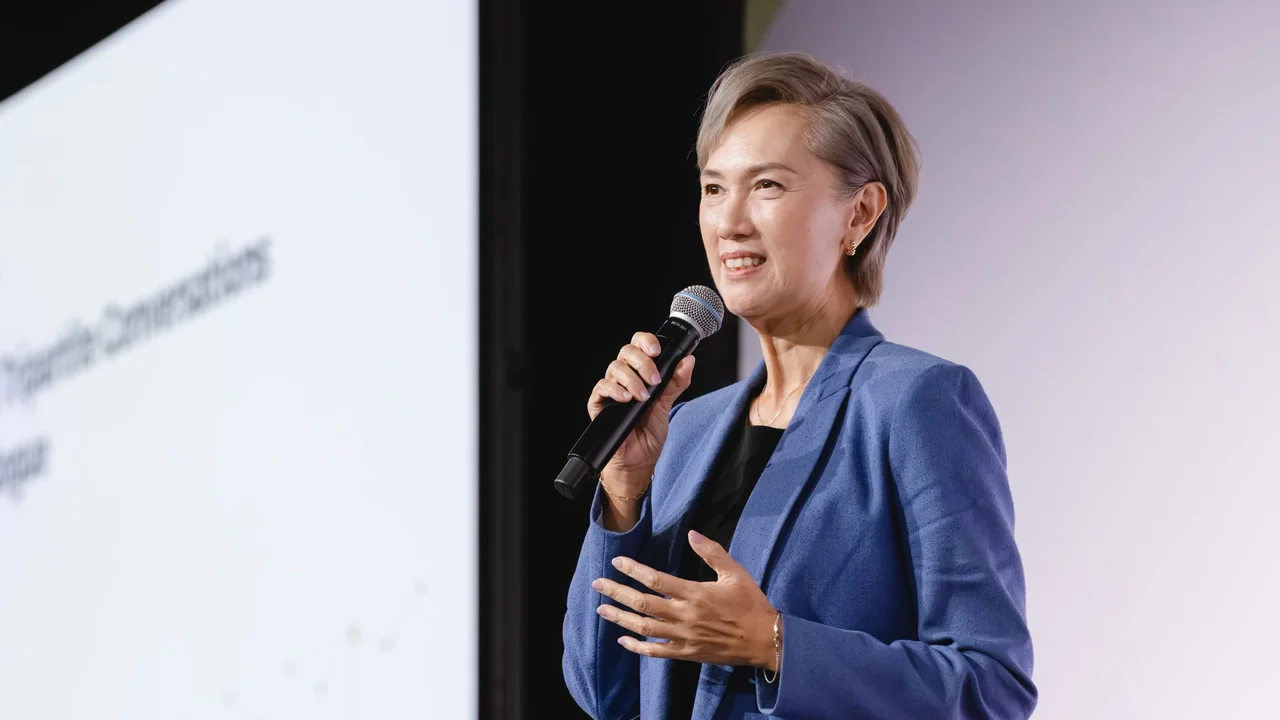
More recently, Minister for Digital Development and Information Josephine Teo addressed the issue of AI safeguards in a LinkedIn post on Thursday (Sept 17). Ms Teo is a strong proponent of AI development, but expressed the need for safety measures alongside it.
The minister likened the situation to aviation developments.
“When we board a plane, we expect to arrive safely – and almost always do. This doesn’t happen by chance. In fact, a tremendous amount of effort is involved.
From how the aircraft is manufactured and serviced to how the airspace and airports are managed, there are hundreds, if not thousands, of standards and regulations to keep us safe,” she wrote.
In other words, people are safe not because aviation stopped developing, but because safety measures, training, and safeguards developed along with the industry. This is what we have grown to expect companies to do.
“Trust is an essential requirement for a technology to be regularly relied upon,” she wrote, adding that in time, AI “must have its own safety set-ups,” which the minister admitted takes time.
In Singapore, safeguards are developed together with AI adoption, with AI Verify, the Singapore AI Safety Institute and our Model AI governance frameworks supporting this work. The city-state also works with global organizations toward this end.
“We will not have all the answers from the outset. But as AI grows more capable, its safeguards must keep pace,” Ms Teo added.
Commenters on her post have been mixed. Many expressed confidence in Singapore’s capabilities, and a number of LinkedIn users praised the minister’s aviation analogy.
“Trust doesn’t come from hoping nothing goes wrong. It comes from building the systems, standards, and testing to understand what happens when it does.
In my experience, AI is at a similar inflexion point. We’re building the governance frameworks, but the next step is proving that the safeguards actually hold up under real-world pressure, across use cases, languages and cultures,” one noted.
Some, however, shared their concerns.
“AI Is Not an Airplane,” a commenter wrote, adding, “Comparing AI safety with airplane safety is useful—but potentially misleading. Aviation operates within a relatively controlled physical environment, with clearly defined engineering parameters, operating procedures, and safety boundaries. AI is fundamentally different. Its behaviour can evolve through training, interaction, deployment context, and human use. Its risks extend beyond physical accidents to misinformation, privacy, bias, cybersecurity, manipulation, and autonomous decision-making. An airplane does not rewrite its own operating logic or generate new information for billions of users. Therefore, aviation can provide valuable lessons in rigorous testing and governance, but AI demands a broader safety framework designed specifically for intelligent, adaptive, and general-purpose technologies.”
Newsletter
Get updates straight to your inbox
“In AI, I would argue that the safety implications are even more far-reaching, impacting human lives and society. [Compared] to aviation, the AI sector is moving so quickly that safeguards can hardly catch up. This is a clarion call for safeguards to not only catch up, but be robust enough to ensure the risks to human society and lives are contained,” another added. /TISG