
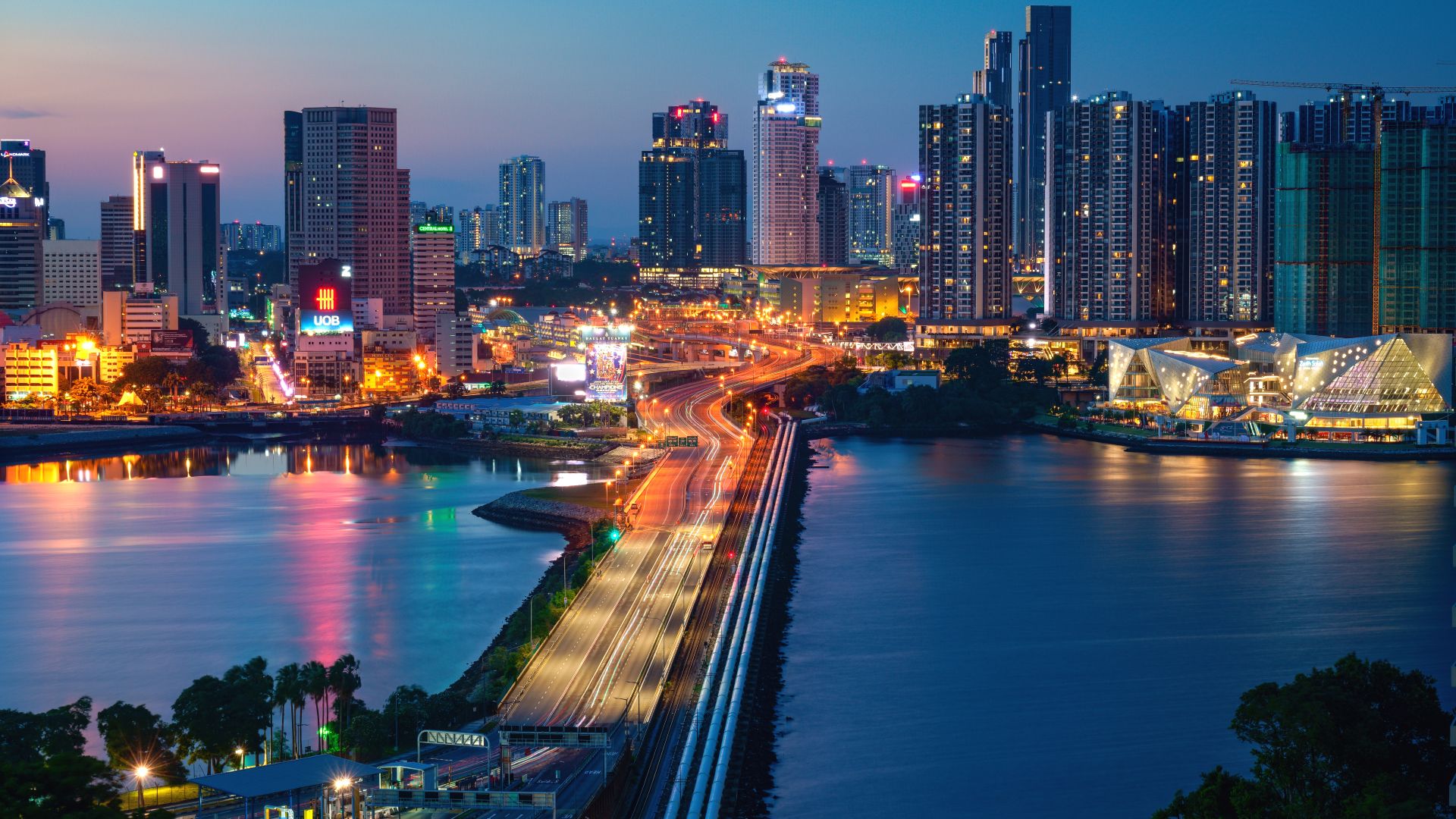

JOHOR: The Johor-Singapore Special Economic Zone (JS-SEZ) has attracted 1,436 investment inquiries since January last year, with Johor’s Menteri Besar Dato’ Onn Hafiz Ghazi signalling that the state’s priority is now converting that pipeline into committed, high-value projects rather than simply accumulating inquiry numbers.
Of the 1,436 inquiries, 43 were referred by Singapore’s Economic Development Board (EDB) and Enterprise Singapore, showing the active role Singapore’s investment agencies are playing in channelling potential investors toward the zone. It also highlights the bilateral nature of the JS-SEZ’s investment attraction machinery.
According to Invest Johor, Dato’ Onn Hafiz stated that “the numbers point to growing momentum behind the JS-SEZ, supported by closer cooperation between Johor and Singapore.” The challenge now, he indicated, is translating inquiry volume into economic substance.
What the JS-SEZ covers
Formally established through a bilateral agreement signed in January 2025, the JS-SEZ spans nine priority sectors: manufacturing, logistics, the digital economy, energy, financial services, business services, education, healthcare, and tourism.
Johor’s proximity to Singapore, availability of industrial land, and relatively lower operating costs compared to the city-state are among the key factors driving investor interest.
A pipeline of 1,436 inquiries shows a meaningful amount of interest, but inquiry-to-commitment conversion is where special economic zones succeed or fail.
Dato’ Onn Hafiz’s framing of focusing on quality over volume, high-value spillovers over raw investment totals, suggests the Johor state government is aware that the zone’s long-term credibility depends on what actually gets built and who benefits, not on how many companies have asked questions.
Why this matters for Singapore
The 43 EDB and Enterprise Singapore referrals are a small but significant data point. They show that Singapore’s investment agencies are actively directing investor interest across the Causeway. This is a sign that the bilateral economic relationship underpinning the JS-SEZ is functioning as intended.
For Singapore-based businesses and investors, the growing inquiry pipeline also shows that the zone is attracting serious attention from a range of investors, which in turn strengthens the case for possible early positioning in sectors where the JS-SEZ’s nine priority areas overlap with Singapore’s own economic strengths.
 Follow Google News
 Join us on WhatsApp
 Follow us on Telegram