
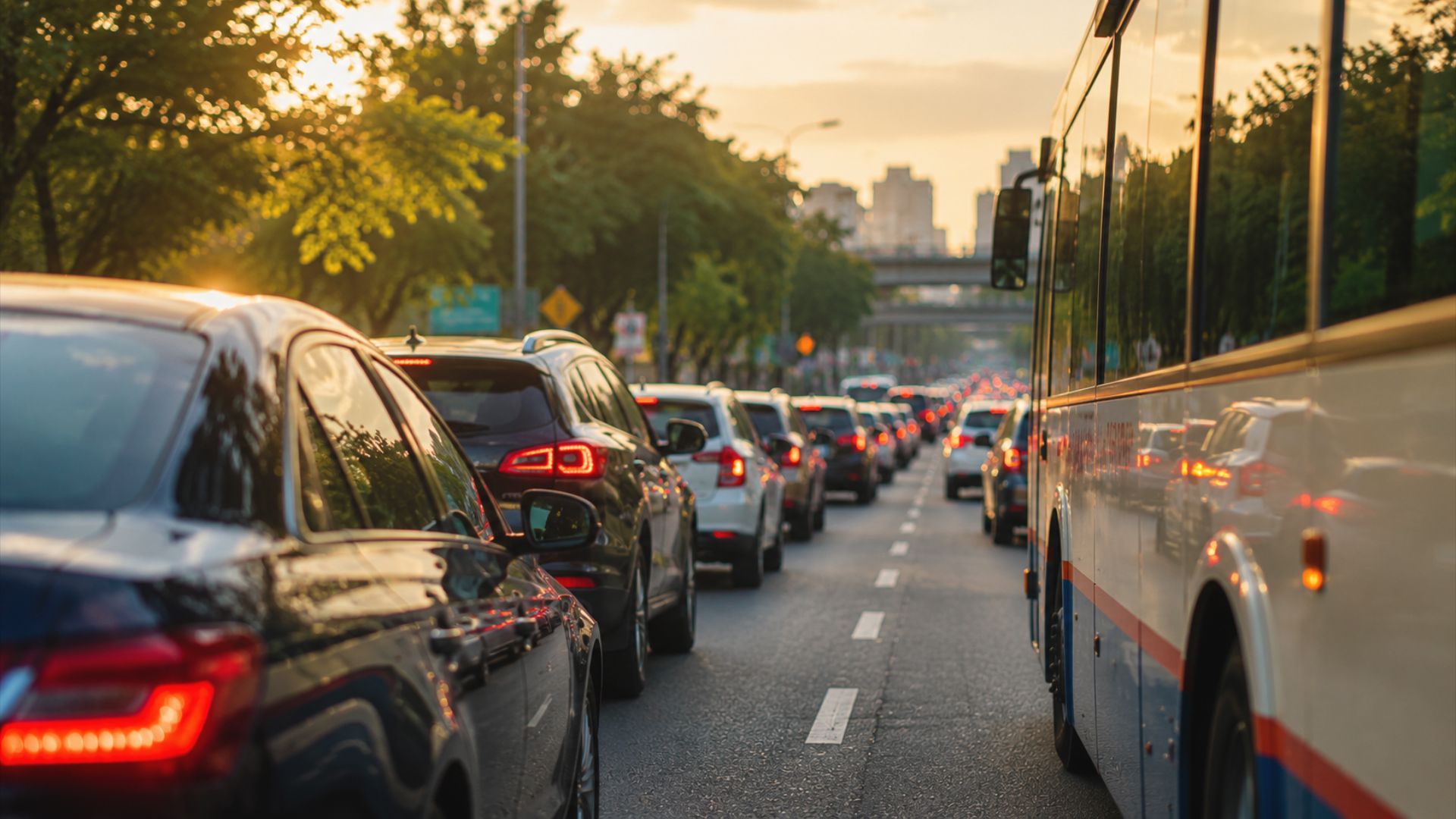

SINGAPORE: The Rapid Transit System (RTS) Link promises to change how people travel between Johor Bahru and Singapore, but unless traffic on Johor Bahru’s roads improves, buses may struggle to deliver the fast and reliable journeys commuters expect, Timothy Wong, Senior Lecturer at the Department of Economics at the National University of Singapore (NUS), shared his view.
The RTS Link, scheduled to open in January 2027, will connect Bukit Chagar with Woodlands North and carry up to 10,000 passengers an hour in each direction. As such, Mr Wong opined that congestion pricing or road-use fees should be introduced alongside stronger public transport, rather than waiting until later; Channel NewsAsia (CNA) published his commentary (July 20).
Johor Bahru is also expanding its transport network, including a planned RM10 billion elevated Autonomous Rapid Transport (e-ART) system, although that project is expected to take several years to complete.
Road pricing works if buses can move faster
Mr Wong said buses should become the backbone of Johor Bahru’s transport network while the e-ART system is being built, and continue to serve as the city’s last-mile option after it opens.
Johor’s plans already include more bus routes, larger fleets, dedicated bus lanes and shuttle services linking commuters to the RTS station.
Still, Mr Wong said those improvements won’t deliver their full benefit if buses remain stuck in the same traffic as private cars. He believes congestion pricing and public transport upgrades should happen together because each supports the other.
Congestion pricing or road-use fees have reduced traffic in other cities
Mr Wong pointed to examples from overseas where relatively small congestion road pricing reduced traffic.
He said Stockholm recorded an immediate drop of about 20% in city-centre traffic after introducing congestion pricing in 2006. London also saw traffic within its congestion charging zone fall after the launch of road pricing in 2003.
According to Mr Wong, even a small fee can encourage some motorists to adjust their travel time, route, or mode of transport, thereby reducing congestion and allowing buses and other vehicle drivers to move more smoothly.
He added that money collected through congestion pricing could help pay for larger bus fleets, better services and park-and-ride facilities.
Road-use fees don’t have to hurt lower-income commuters
One of the biggest concerns is whether road pricing would place a heavier burden on lower-income commuters.
Mr Wong acknowledged the concern but said many lower-income workers already pay a price in the form of long hours spent in traffic. Faster and more reliable buses could reduce that hidden cost.
He also suggested governments could use revenue from congestion pricing to subsidise public transport, improve bus services in underserved areas or provide financial support to lower-income motorists.
People will support road pricing when it can save time
Road pricing has never been an easy political sell, but Mr Wong noted that public attitudes have changed elsewhere once people have experienced shorter journeys and better traffic flow.
He cited Stockholm, where voters backed congestion charging after a trial period, as well as London and New York, where acceptance grew after implementation.
Johor Bahru’s situation may differ because buses, rather than rail, are expected to carry much of the city’s daily travel demand, which makes free-flowing roads even more important if public transport is to become a genuine alternative to driving.
The RTS Link will bring thousands more commuters into Johor Bahru every day, but whether those travellers choose buses or cars may depend less on the number of buses available than on whether they can move without sitting in traffic.
Congestion pricing isn’t a cure-all, yet if any charges collected are reinvested transparently into better buses and transport infrastructure, people may judge the policy by the time it saves rather than the toll it costs.
 Follow Google News
 Join us on WhatsApp
 Follow us on Telegram