
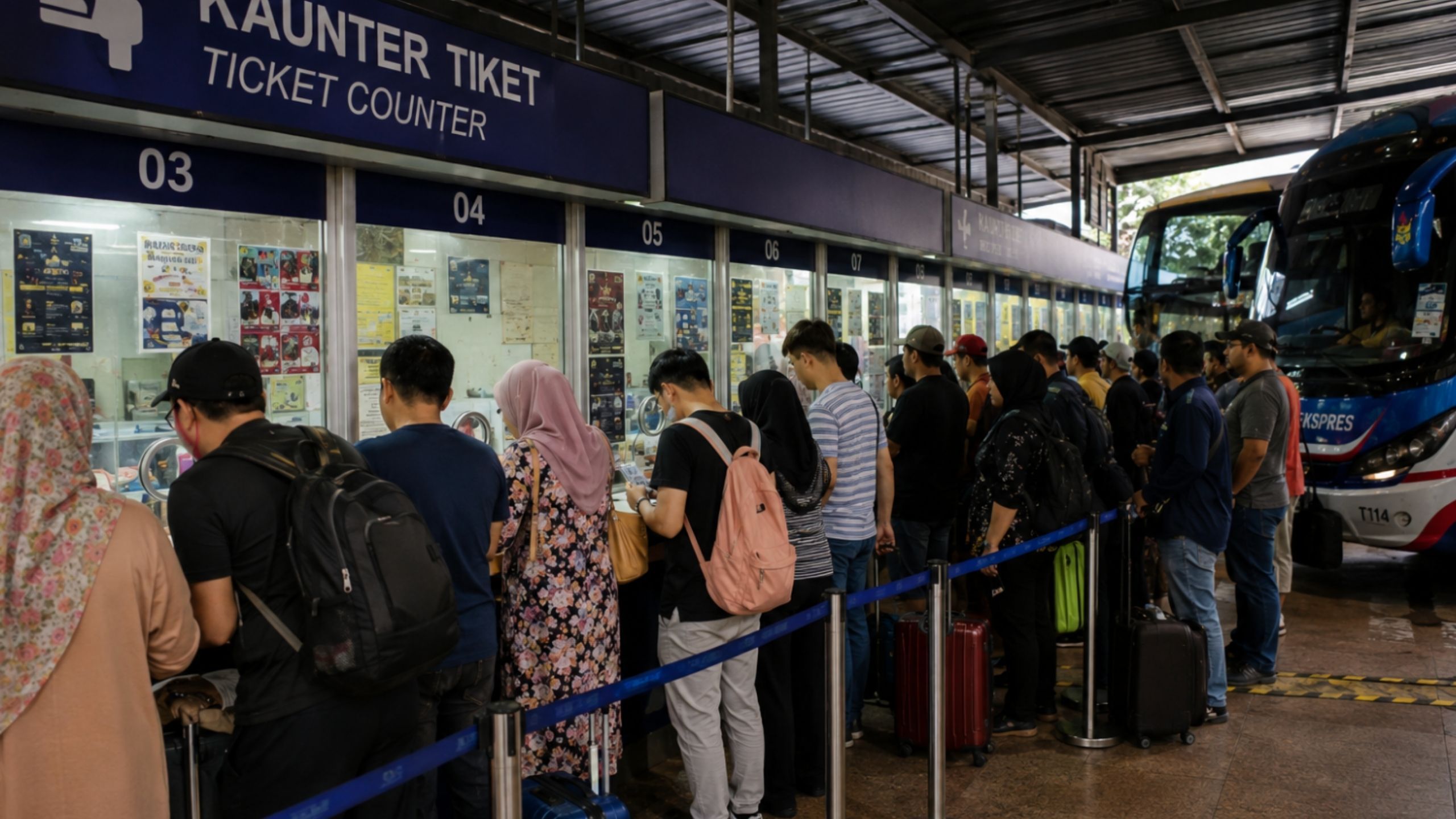

MALAYSIA: Interstate express bus tickets in Malaysia may cost more following new regulations. The updated framework reclassifies buses based on seating layout rather than facilities, meaning most two‑plus‑one configurations are now deemed executive units.
While fares remain capped at 9.3 sen (cent) per km for economy, executive services must charge at least 15 sen per km. Industry sources warn this change could reduce discounts, raise travel costs, and push passengers toward private vehicles.
Social media users have highlighted rising bus fares, sparking concern among Malaysians who rely heavily on public transport.
For many, owning a car remains costly, making buses an essential mode of travel. The increase comes amid a broader cost-of-living crisis, which has already strained household budgets.
Over on X, some users say ministers in Malaysia are making statements daily that the economy is growing. One X user pointed out that a standard intercity bus fare was previously around RM44.50 (S$14) and is now RM64.80 (S$20.50). This may not seem much for many, but for those who earn RM2,000 (S$633) monthly, it’s a significant increase.
Some Malaysians are questioning why job opportunities remain concentrated in major cities like Kuala Lumpur instead of being spread across the country.
Another X user pointed out the lack of diverse employment options in Kemaman, Terengganu, where most jobs are tied to the oil and gas industry. For residents outside that sector, opportunities are limited.
Most agree that rising costs are tied to global inflation, not just Malaysia. One X user noted that RM50 (S$15.80) in the 1970s could buy far more than it does today, and back then the currency gap with the Singapore dollar was much narrower. The comment underscores how inflation and currency shifts have eroded purchasing power over decades. For some Malaysians, the recent bus fare increases may seem trivial — the price of a cup of coffee while riding in chauffeured cars. But for the B40 group, that same amount could cover several days’ worth of food.
This contrast highlights widening inequality and raises the question: Is Malaysia’s economic growth truly benefiting its citizens, especially those in lower‑income categories who feel the brunt of rising living and transportation costs?
 Follow Google News
 Join us on WhatsApp
 Follow us on Telegram