
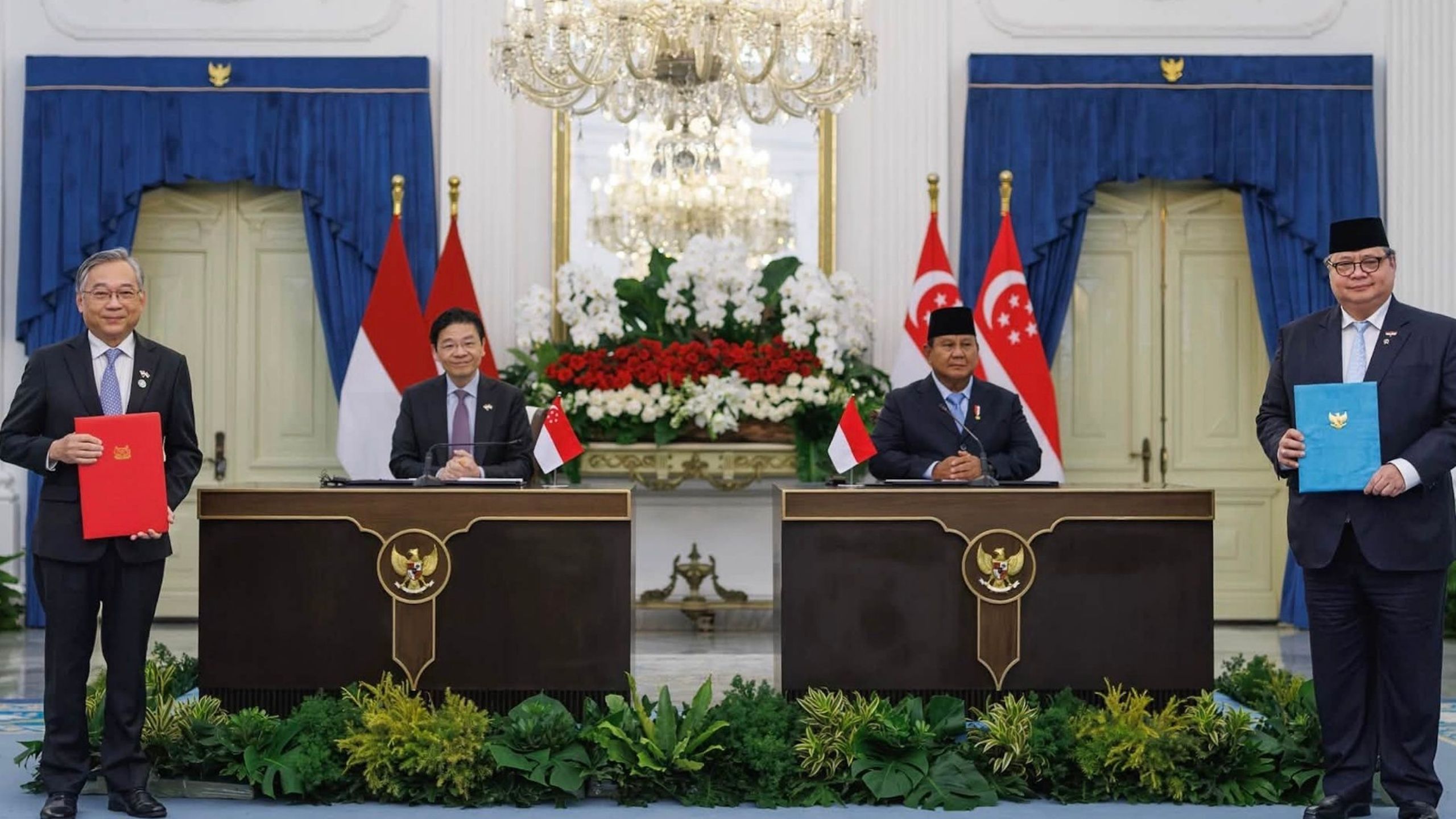

SINGAPORE: Earlier this week, Singapore and Indonesia reaffirmed their commitment to keep the Straits of Malacca and Singapore open. Lawrence Wong, the Prime Minister of Singapore, was at the second Singapore-Indonesia leaders’ retreat at Istana Merdeka in Jakarta on July 6.
Afterwards, PM Wong and Indonesian President Prabowo Subianto held a joint press conference, which the Singaporean leader said included a “very fruitful, open, candid, heart to heart talk… on how we can take our partnership even further.”
Among the topics discussed were the developments in the Middle East and their implications for both countries, especially with regard to the Straits of Malacca and Singapore.
Mr Wong said the two countries, as littoral states bordering the Straits, are strategically aligned.
“Both President Prabowo and I agreed that we will do our part, together with the other littoral states, to ensure that the Strait of Malacca and the Strait of Singapore remain safe, open and accessible to all,” he added.
The Strait of Malacca, which is bordered by Indonesia, Malaysia, and Singapore, is an important link between the Indian and Pacific Oceans and carries as much as 40% of the world’s traded goods.
Moreover, more than 35% of the world’s supply of oil transported by sea passes through the strait, which means it is vital for the supply of energy for Asia.
Unfortunately, the war in the Middle East has caused concerns that the Strait of Malacca and other maritime chokepoints could be subject to similar pressure as the Strait of Hormuz, analysts have said. Some have warned that the Strait of Malacca, which is 10 times narrower than the Strait of Hormuz, could be used as both a military chokepoint and a pressure point in global trade.
More recently, as tensions in the Middle East have begun to ease, there have been reports that Iran and Oman have jointly proposed to administer the Strait of Hormuz, which includes collecting a toll from ships that pass over the waterway.
If this happens and is replicated elsewhere, such as in the Strait of Malacca, it could cause an oil shock.
Janiv Shah, vice president of commodity markets at Rystad Energy, told CNBC, “If we see a potential toll booth with Iran, sort of, enacting upon the Strait of Hormuz, that something similar could be enacted on others, and of course, the most important from a volumetric perspective is … the Strait of Malacca.”
Thus, the statement from Singapore and Indonesia’s leaders is all the more significant for a world that has yet to recover from the effects of the conflict in the Middle East. /TISG
Read also: Singapore & China reiterate commitment to keep Strait of Malacca open
 Follow Google News
 Join us on WhatsApp
 Follow us on Telegram