
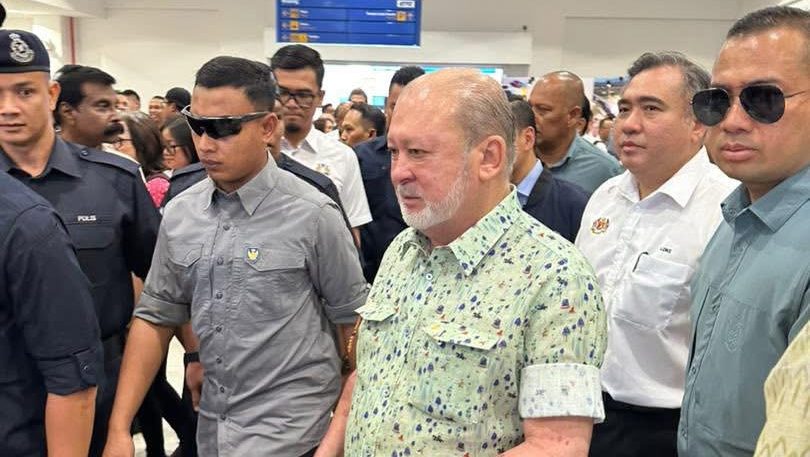

MALAYSIA: History was made in Johor as His Majesty Sultan Ibrahim, the Yang di-Pertuan Agong, officiated the inaugural Electric Train Service (ETS) between Kuala Lumpur and Kluang, which was a development long awaited by Johoreans. This was more than just the opening of a new transport option; it was also a proud moment for the state and a symbol of Malaysia’s push towards modern connectivity.
The sight of the King offering his support for the opening of the high-speed train shows just how much weight this event symbolises. For Johor, this marks not only an upgrade to Malaysia’s rail network but also a step towards making daily life smoother and more connected for its people.
A catalyst for growth
In a translated Facebook post, Johor executive councillor Lee Ting Han described the new ETS service as “not only opening a new leaf in the country’s public transport system, but also becoming a catalyst for economic, social and tourism development in Johor.”
The line is expected to ease mobility between rural and urban communities, giving small towns like Kluang greater access to the capital and beyond. Faster travel means new opportunities — from encouraging tourism in Johor’s quieter districts to allowing residents to commute more efficiently for work, study, or family visits.
Lee added that the train would “facilitate the movement of citizens, connect urban and rural communities, and strengthen Johor’s contact network with Kuala Lumpur and other provinces.”
Johor Maju 2030 on track
The project ties in with Johor’s broader ambitions under the Johor Maju 2030 plan, which envisions a state that is modern, competitive, and well-integrated with Malaysia’s national economy. Improved rail connectivity doesn’t just bring convenience; it helps distribute growth more evenly, bridging the gap between smaller towns and urban centres.
Lee stressed that this moment is “proof of the government’s determination in providing modern facilities to the citizens, in order to realise the dream of Johor Maju 2030.” For many in Johor, the King’s presence at the launch elevated the sense of pride, as if the state’s aspirations had received a royal seal of approval.
Why Singaporeans should take note
The KL–Kluang ETS is not only significant for Malaysians. For Singaporeans who regularly cross the Causeway, this represents new possibilities. With Johor towns becoming more accessible by fast rail, Singapore residents can expect smoother journeys into Malaysia for tourism, leisure, or business without the hassle of traffic congestion that makes the travel feel like a test of patience.
Combined with upcoming projects like the Johor–Singapore Rapid Transit System (RTS), the new ETS line enhances Johor’s position as a gateway. For Singaporeans, this means weekend escapades, investments, and partnerships in Johor will become even more attractive.
Read also: Johor–Singapore SEZ touted as ‘next Shenzhen’ in push to reshape cross-border growth
 Follow Google News
 Join us on WhatsApp
 Follow us on Telegram