
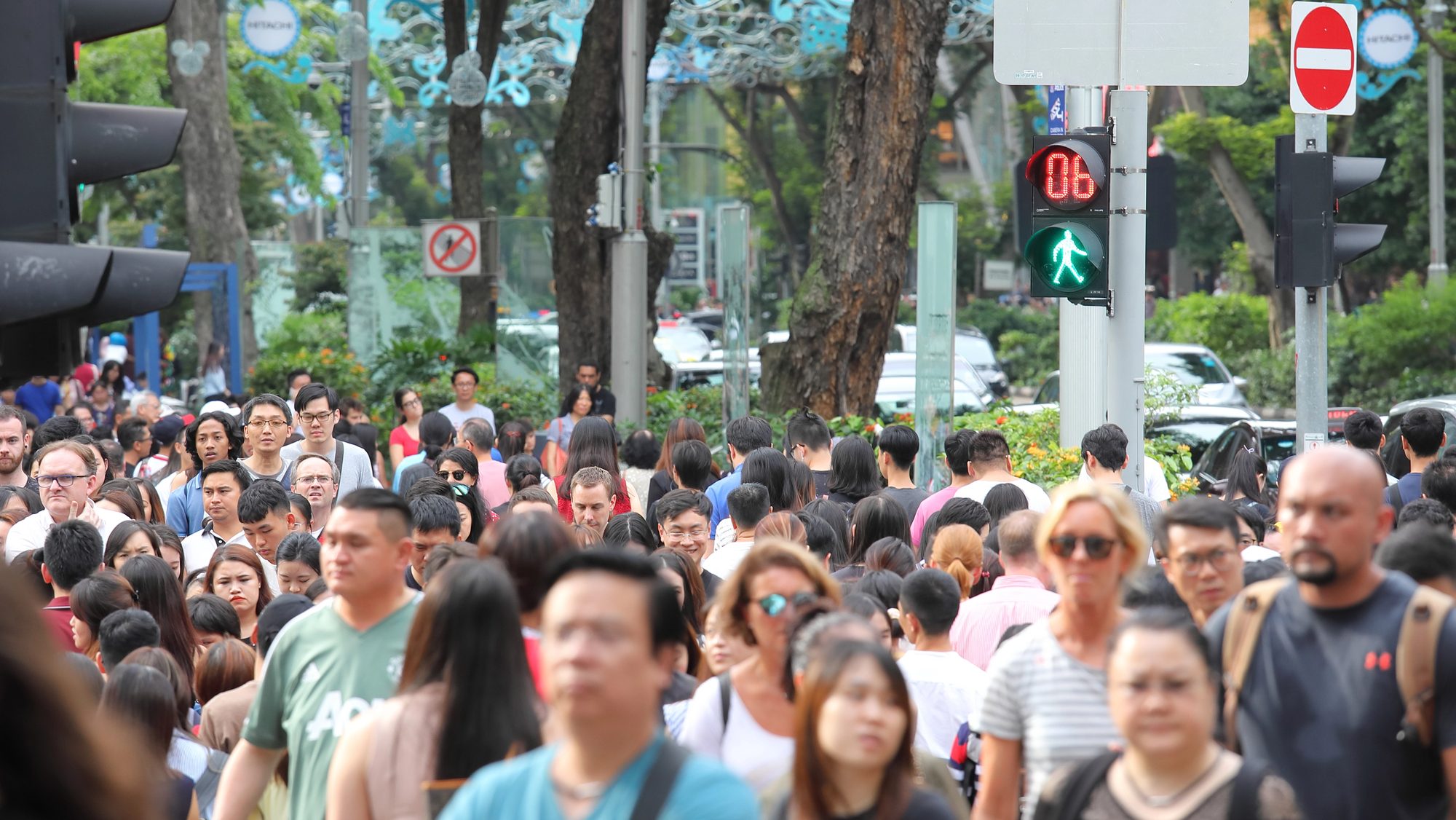

SINGAPORE: When people think and picture the Lion City, certain stereotypes come to mind: It’s part of China, it’s impeccably clean to the point of being sterile, and no one dares to chew gum, but talk to long-time residents, and a far more distinct, culturally rich depiction emerges—one that’s frequently misjudged or disregarded by those on the outside looking in.
A post on Reddit asking, “What do people who live outside of Singapore misunderstand about Singapore?” triggered a spate of responses from both locals and expats. Their perceptions depicted a fascinating representation of a nation far more encrusted than the trivialities imply.
Myth #1: “Singapore is part of China”
This is perhaps the most insistent and erroneous supposition. For many strangers, predominantly those unacquainted with Southeast Asia, Singapore gets lumped in with its much bigger northern neighbour.
“I’ve had people ask if Singapore is in China,” one netizen wrote, reflecting an annoyance that’s become too common. Another added, “Some Filipinos think Singapore is a Chinese country, people- and culture-wise. When they hear you’re Malay, they assume you’re from Malaysia.”
Chinese Singaporeans undeniably comprise the ethnic mainstream, but that doesn’t mean the country is culturally or politically Chinese. Singapore is an autonomous, multi-ethnic city-state, home to a rich combination of Chinese, Eurasian, Malay, Indian, and other communities. Each ethnicity contributes to the national distinctiveness in noticeable and expressive ways.
Myth #2: “Everyone in Singapore speaks Chinese”
In Singapore, English is the main language of training, business, and day-to-day communication. “People outside who have never visited Singapore think everyone here speaks Chinese,” one Redditor noticed. “Even though people here mostly speak English.”
Malay, remarkably, holds the position of national language, a detail that amazes many foreigners. Singapore’s national anthem, Majulah Singapura, is chanted in Malay. While the regular Singaporean may not speak the language confidently, it remains an essential element of the nation’s heritage.
Myth #3: “It’s all glitz, glam, and Crazy Rich Asians”
The global success of the movie Crazy Rich Asians brought Singapore onto the world stage—but at a cost. “I think the movie did more harm than good for the cultural identity of Singapore,” one commenter noted. The film’s portrayal of the super-rich select few living an extravagant lifestyle in unspoiled environs left many with the idea that Singapore is an adventure playground for the affluent.
The truth? While Singapore is undoubtedly contemporary and industrialised, it’s also an authentic place with real people wrestling with socioeconomic issues, just like other people in any other country.
Myth #4: “Singapore is immaculately clean and harshly controlled”
Yes, Singapore has a character of being a “fine city”—both in terms of sanitation and in terms of issuing penalties for littering, jaywalking, and, yes, chewing gum, but as some Redditors pointed out, this repute can be deceptive.
“Only to be surprised when they see people spitting on the sidewalks,” one local remarked. Another added, “There’s rubbish lying around and in the bins—Japanese people tweet about it!”
While it’s more hygienic than most global cities, Singapore isn’t a germ-free paradise. It’s a lived-in place, with all the inadequacies, defectiveness, and inconsistencies that come with city life.
Myth #5: “There’s a ‘Singaporean look’”
One of the more understated fallacies revolves around physical looks. “I’ve had people say ‘you don’t look Singaporean’ when I tell them where I’m from,” said one Redditor. This postulation originates from an inadequate understanding of what a “typical” Singaporean looks like, habitually defaulting to Chinese physical attributes.
Essentially, Singapore is proudly diverse, and its people mirror that multiplicity. From Indian shrines to Malay celebrations to Chinese New Year carnivals, Singapore’s cultural calendar is as wide-ranging as its food and its inhabitants.
So, what is Singapore?
It’s not a slice of China. It’s not a monument and not a movie set.
It’s a multilingual, religiously diverse, multi-ethnic society that harmonises order with sincerity, innovativeness with tradition. It’s where learners study in English but sing their national hymn in Malay, where Muslims break fast during Ramadan next to hawkers vending pork noodles, and where street food is a national gem served underneath gigantic high-rise buildings.
As one Redditor summed it up: “I wish they would promote our history and culture more. It’s something to be proud of.”
 Follow Google News
 Join us on WhatsApp
 Follow us on Telegram