
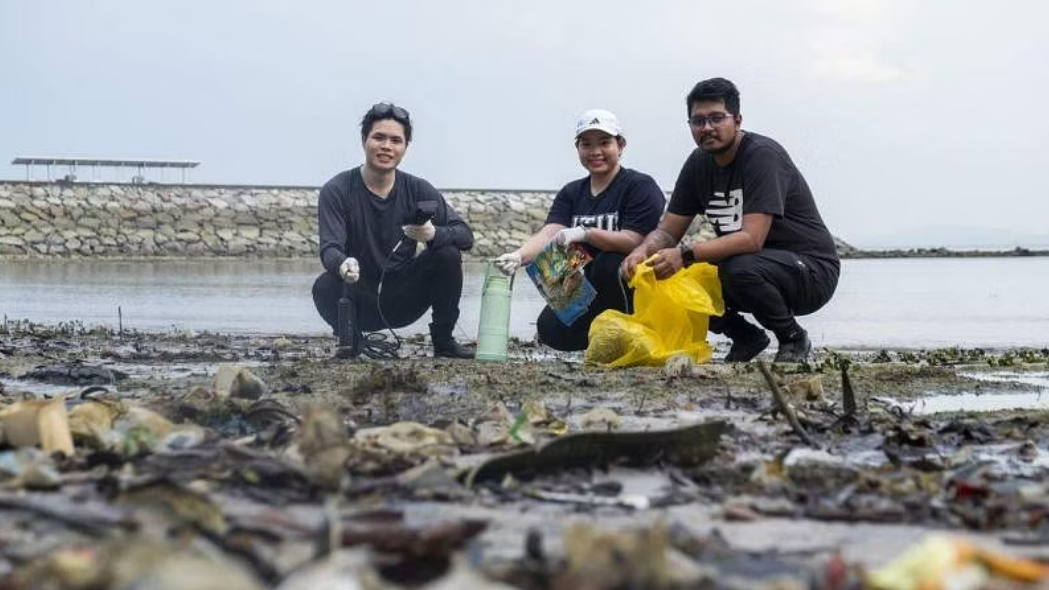

SINGAPORE: A new study by scientists from Nanyang Technological University, Singapore (NTU Singapore), has revealed potential threats and yet promising resources in the intricate relationship between bacteria, fungi, and plastic debris thriving on Singapore’s shores. Co-author Dr Sakcham Bairoliya expressed optimism, saying, “The presence of potential plastic-eating bacteria in the coastal plastispheres presents an opportunity to use these microorganisms in the plastics degradation process.”
The research, published in the September edition of Environment International, focuses on the ‘Plastisphere,’ an ecological community formed when microorganisms attach to and colonize plastic debris that enters the ocean. Despite the massive volume of plastic waste in the world’s oceans, little is known about how the plastisphere assembles and interacts in tropical marine environments.
Labyrinthulaceae, a harmful microorganism linked to seagrass wasting disease, and cyanobacteria Lyngbya, known for poisoning marine life, raised concerns about the impact of marine plastics on Southeast Asia’s ocean life. Bacteria associated with coral diseases, such as Acinetobacter and Parvularculaceae, were also found in abundance on plastics.
Co-author Zin Thida Cho highlighted the worrisome aspect: “Potentially harmful microorganisms have been discovered on the plastic debris, suggesting that marine plastics create a pathway for them to move between habitats, potentially infecting ocean life across Southeast Asia.”
Despite the alarming findings, the research team also uncovered potential plastic-eating bacteria, including Muricauda, Halomonas, and Brevundimonas. This discovery brings hope that these bacterial strains could be harnessed to accelerate the degradation of plastic waste.
The study also explored the influence of sediments on the plastisphere, revealing that sediments predominantly shape the composition of plastisphere communities in coastal locations. NTU Associate Professor Cao Bin emphasized the far-reaching impacts of ocean plastic pollution, stressing the need for environmental policies to consider both plastics and microbial communities.
In future studies, the NTU team plans to investigate how microbial communities in the plastisphere adhere to different types of plastics and evolve in various environments. The research aims to contribute to developing environmentally friendly plastics and novel plastic waste management processes.
 Follow Google News
 Join us on WhatsApp
 Follow us on Telegram