
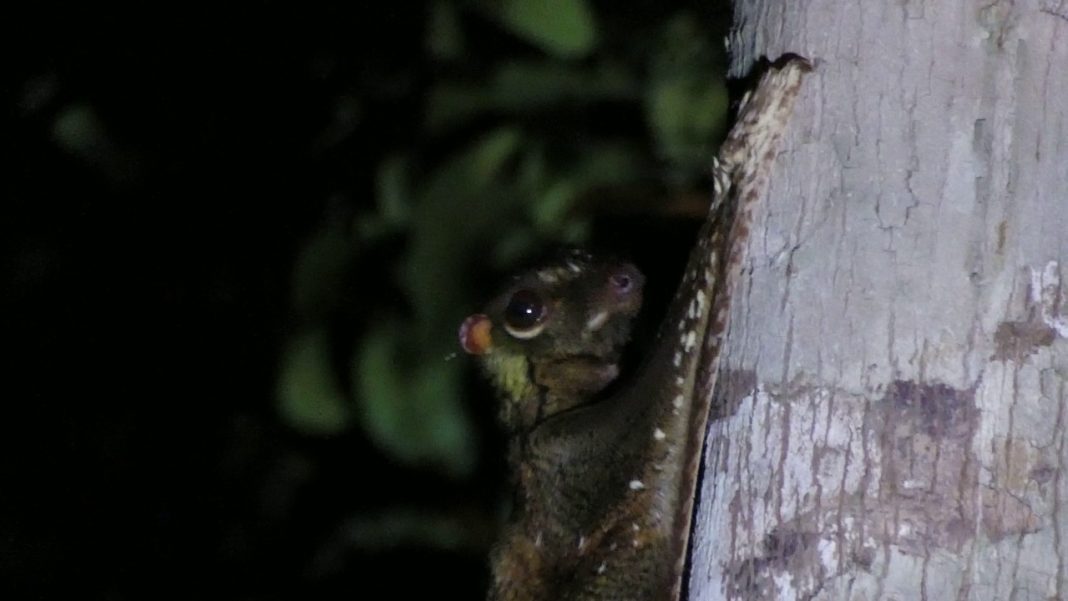

SINGAPORE: HDB residents and nature enthusiasts in Singapore were treated to a captivating sight this week as a rare native Sunda Colugo was spotted gliding in front of an public housing block in close proximity to Bukit Batok Nature Park. The remarkable sighting of this unique animal has sparked excitement and admiration among locals.
A video capturing the graceful flight of the Sunda Colugo was uploaded to the Complaint Singapore YouTube channel, quickly garnering attention and generating interest in the elusive creature. The footage shows the creature gliding effortlessly through the air, from one tree in front of the block to another, as onlookers admired how beautifully it moved.
The Sunda Colugo, also known as the Sunda Flying Lemur, is a remarkable mammal native to Southeast Asia. Despite its name, it is not a true lemur nor a bat but rather a member of the colugo family. Known scientifically as Galeopterus variegatus, the Sunda Colugo is renowned for its unique gliding ability, aided by the patagium—a membrane stretching from its neck to its fingertips and toes.
Singapore’s urban environment makes it an unlikely habitat for this species, making sightings of the Sunda Colugo exceedingly rare. The lush greenery and proximity to Bukit Batok Nature Park likely attracted the creature to the area, providing it with a suitable habitat to forage for food and navigate the treetops.
The presence of the Sunda Colugo in Singapore serves as a reminder of the importance of preserving and protecting natural spaces within the city-state. Such encounters highlight the diverse wildlife that exists even amidst urban landscapes, emphasizing the need for conservation efforts and the coexistence of humans and wildlife.
While the sight of the Sunda Colugo has enthralled many, it is essential to remember that wildlife should be admired from a distance and not disturbed or fed. Under the amended Wildlife Act in Singapore, feeding any wildlife is strictly prohibited. Offenders may face penalties, including fines of up to S$5,000 for first-time offenders and S$10,000 for subsequent offenses.
Authorities urge the public to appreciate and respect the natural world, maintaining a responsible approach when encountering wildlife. By observing animals in their natural habitats without interference, Singaporeans can contribute to the preservation of these precious species and their ecosystems.
 Follow Google News
 Join us on WhatsApp
 Follow us on Telegram