
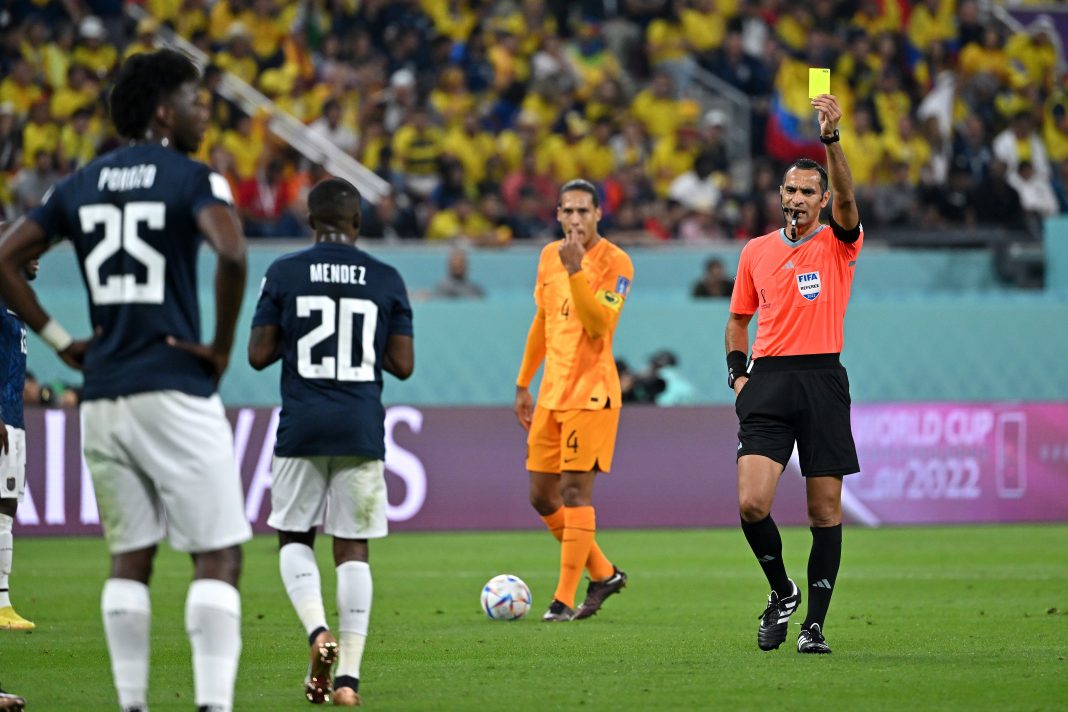

WASTING time when you’re holding the lead has always been a football tradition, right from the grassroots, more so at this World Cup in Qatar.
Each half is at 45 minutes. But the deliberate prolonged delays have extended play by some extraordinary proportions. And the best the match officials can do to counter this would be to add stoppage time.
And you’ve seen lots of it. Would this really be fair compensation for crucial lost time?
The first five games so far have had about 85 minutes added on between them, with England’s match against Iran lasting an incredible 117 minutes and 16 seconds.
MINIMISE LOST TIME
The chairman of FIFA’s refereeing committee, Pierluigi Collina, has seriously tried to minimise the huge amounts of stoppage time being played at the Qatar World Cup. England‘s match with Iran on Monday was a prime example of the new approach as the game ran almost half an hour longer than scheduled.
Even Jita Singh, Singapore’s award-winning coach, who is also a referee, has praised FIFA for clamping down on time-wasting at the World Cup in Qatar – stating the critical change of approach is long overdue. This time around, we have seen matches lasting 100 minutes due to substantial stoppages and the theme of this year’s tournament does not appear to be slowing down anytime soon.
Now the fourth officials (the reserve referees) have been told to keep tabs on all the lost time during matches. The approach was also carried out in Russia four years ago but this time around, it appears officials are taking the instructions more seriously.
ACCURATE IN COMPENSATING
“In Russia, we tried to be more accurate in compensating for time lost during games and that’s why you saw six, seven or even eight minutes added on,” Collina said. “Think about it: if you have three goals in a half, you’ll probably lose four or five minutes in total to celebrations and the restart.”
For example, on Monday, a clash of heads involving Iran goalkeeper Alireza Beiranvand saw no less than 14 minutes of time added on in the first half. A flurry of goals and an apparent concussion for Harry Maguire saw 13 more in the second as fans started to grow confused.
A similar pattern ensued during the Netherlands’ clash with Senegal and the USA’s draw with Wales later in the day, and Collina has suggested that it is down to an effort towards more accurate timekeeping.
As an international referee instructor, I know it’s tough to clamp down completely on time-wasting. Perhaps even impossible, if I dare say.
Let’s hope that latest tighter controls of keeping to the watch to compensate for deliberate time-wastage will make football a greater pleasure to watch.
* Suresh Nair is an award-winning sports journalist who is also a qualified international coach and international referee instructor
 Follow Google News
 Join us on WhatsApp
 Follow us on Telegram