

By Augustine Low

Customers pay good money for good service. Does that mean there should be zero tolerance for anything gone wrong, even through unforeseen circumstance or honest mistake?
Take the recent SingTel fire which left customers without broadband, phone and pay TV services. The reaction was all too familiar – annoyance, then frustration and anger, followed by: I Want Compensation! And after compensation is announced: I Want More!
As Singapore grows more affluent, more mature, it is ironic that we could have a tendency to become more intolerant, more opportunistic. This leaves little room to take stock, to seek to understand rather than let the instinct of confronting and condemning kick in.
It’s interesting that corporations affected by the SingTel episode have reportedly said they are not seeking compensation. Perhaps they know what it’s like to be at the receiving end of an unforgiving public.
Of course, it cuts both ways. Corporations are also guilty of adopting a zero tolerance policy and turning a blind eye to reasonable customer requests. Inflexibility becomes the rule of thumb. But that’s another story, for another time.
I recall the parent (as told by a colleague) who marched to the principal’s office to kick up a big fuss, on discovering that the teacher had erred in deducting an additional mark off her daughter’s test paper.
I fear we are teaching our kids that every wrong, every mistake – no matter how small, how honest – must be punished. We may even go so far as to encourage milking a situation for what it’s worth, of exacting maximum mileage out of someone’s mistake or misfortune.
Earlier this year, McDonald’s held a Hello Kitty promotion which went awry. There was rampant queue jumping and when stocks ran out, tempers flared. Police had to be called in.
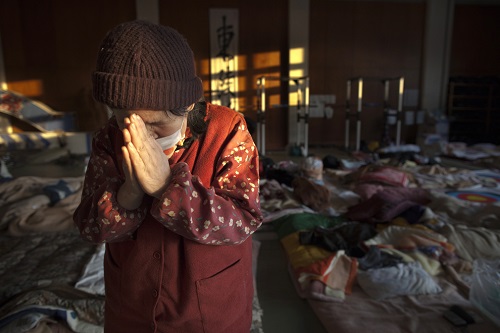
Contrast this to a video clip I saw two years ago but which remains etched in my mind. This was the aftermath of the Fukushima earthquake and tsunami when food supplies ran out and people had to queue for basic necessities at public distribution centres.
A Japanese man, after queuing for many hours, was told that there was nothing left for him. He bowed and walked off. No questions asked, no hue and cry.
He bowed, I think, to show his acceptance and understanding that people were doing their best under very trying conditions, and that no one was to blame.
Will we ever attain such a level of graciousness?
If we get all worked up over Hello Kitty, test paper and broadband service, how would we react on an empty stomach, in times of crisis?
Augustine Low is a communications strategist.
 Follow Google News
 Join us on WhatsApp
 Follow us on Telegram